DC Natural History Museum with Kids: What to Do (Free Visit)
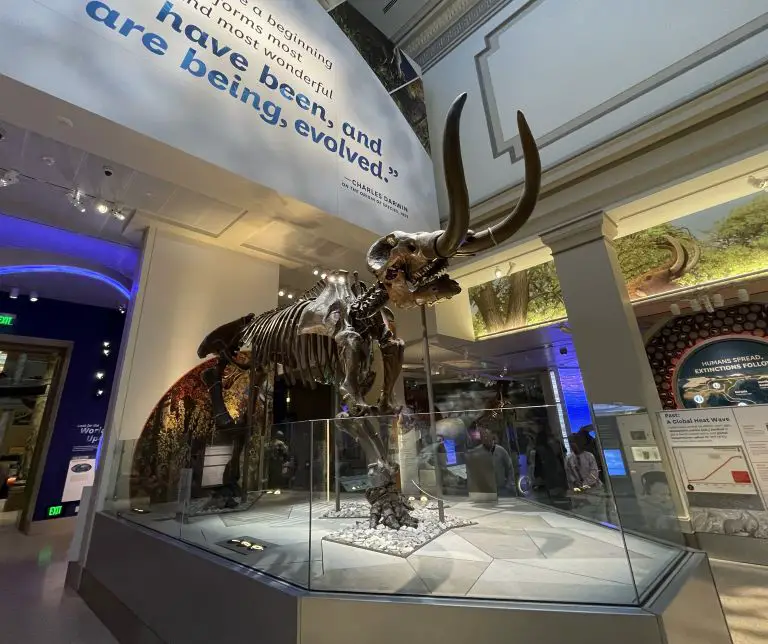
This free museum has a lot to offer, including the Hope Diamond. That doesn’t exactly scream toddler entertainment. So is it worth dragging the kids through? What is there to do at the DC Natural History Museum with kids, and will any of it hold their attention longer than the gift shop? Short answer: yes, plenty, and the price is right. Here’s everything worth your time, floor by floor, with the honest warnings about which rooms might give a five-year-old nightmares.
What is There to Do at the DC Natural History Museum with Kids?
Quick Answer: Is the Natural History Museum Worth It with Kids?
Yes. It’s free, it’s enormous, and there’s a real dinosaur eating another dinosaur in the lobby-adjacent fossil hall. You can do it in two or three hours or burn a whole day, and either way you didn’t pay a dime to get in. The only catch is the crowds, so arrive early. A few exhibits skew dark or creepy for little ones, which I’ll flag as we go.
- Where: 1000 Constitution Ave NW, on the National Mall between 9th and 12th Streets NW, Washington, DC.
- Cost: Free. No tickets or timed-entry passes for general admission.
- Hours: Generally 10 a.m.–5:30 p.m., open every day except December 25. Hours are sometimes extended in spring and summer, so confirm on the official site before you count on a late closing.
- Time needed: Two to three hours for the highlights; a full day if your kids love everything.
- Best for: Dinosaurs, ocean creatures, and big taxidermy. Several halls are a hit with toddlers; a couple skew older.
- Insider move: Go right when it opens. The fossil hall and Ocean Hall get shoulder-to-shoulder by midday.
1. Check Out the Giant Elephant
2. Visit Bone Hall
3. Walk Amongst the Animals in the Hall of Mammals
4. Don’t Miss the Hall of Fossils
5. Get a Little Creeped Out in the Hall of Human Origins
6. See the Mummies (with Caution)
7. Take the Tweens to the Cell Phone Exhibit
8. Watch the Live Insects Crawl
9. Explore Ocean Hall
10. Look Up at the Giant Shark
11. Play in the Q?rius jr. Area
12. See Dum Dum from Night at the Museum
13. Walk the National Mall
14. Spend the Night
As an Amazon Associate, I earn from qualifying purchases.
DISCLOSURE: This post may contain affiliate links, meaning when you click the links and make a purchase, we receive a commission.
What is There to Do at the DC Natural History Museum with Kids?
1. Check Out the Giant Elephant
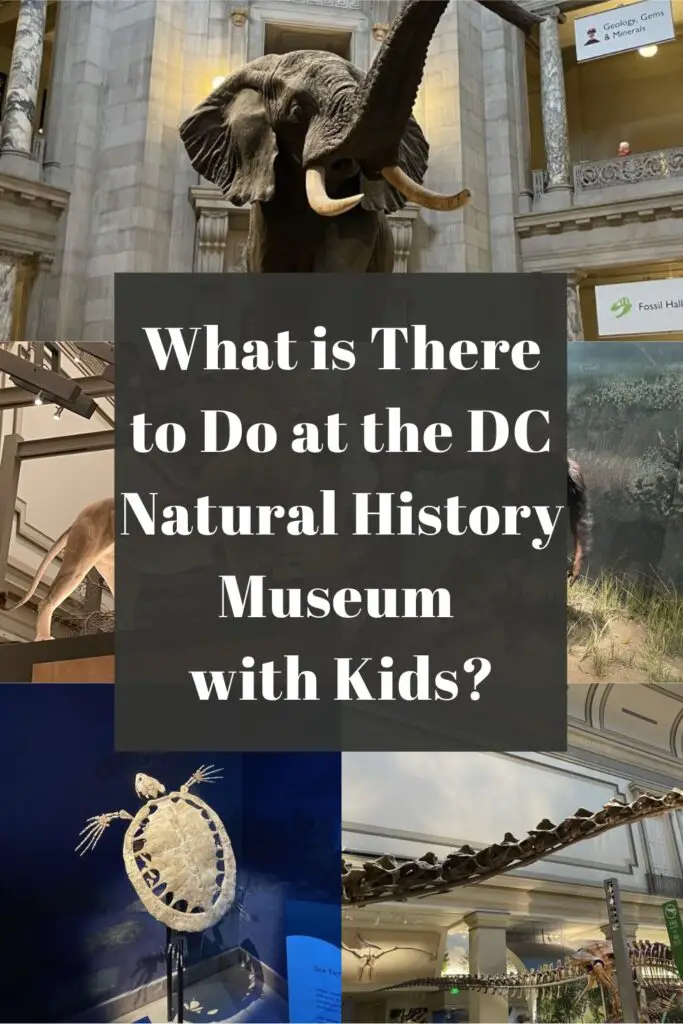
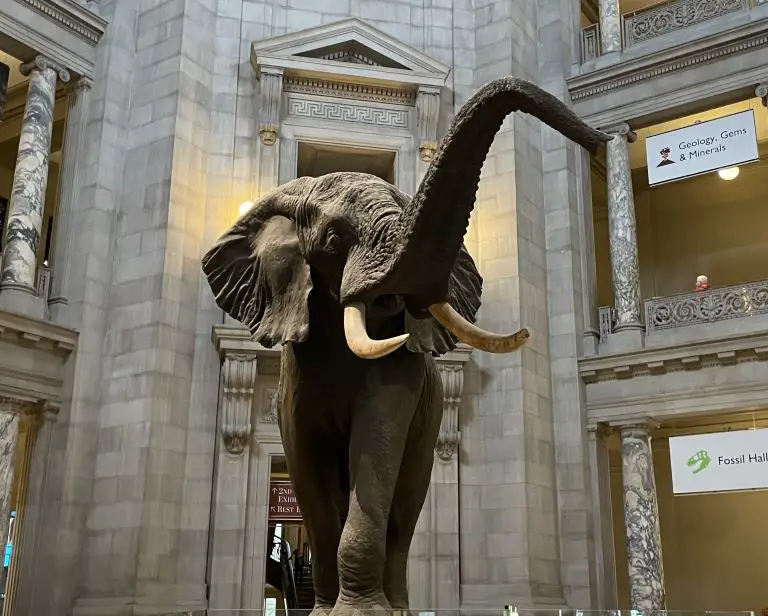
The first thing you see when you walk into the rotunda is Henry, a 13-foot-tall, roughly 11-ton African bush elephant who has greeted visitors since 1959. He’s enormous, he’s the unofficial mascot of the place, and he makes a great “we made it inside” photo before the kids scatter in fourteen directions. Let’s not concern ourselves with his prior life so we can sleep at night.
Location: First floor, in the rotunda.
2. Visit Bone Hall
Michael Scott would have had a field day with the name of this area. Despite that, it’s pretty cool.
Bone Hall is a long, old-school gallery packed with mounted skeletons, including dogs, cats, giraffes, monkeys, snakes, and whales, arranged so you can see how different animals are built. It’s basically a vertebrate family reunion where everyone forgot to bring skin.
Pro tip: The museum has offered a free “Skin and Bones” augmented-reality app that animates some of these skeletons through your phone. It can be a fun way to keep a restless kid engaged, but app availability changes, so check that it’s still live before you promise the little one a dancing skeleton.
Location: Second floor.
3. Walk Amongst the Animals in the Hall of Mammals
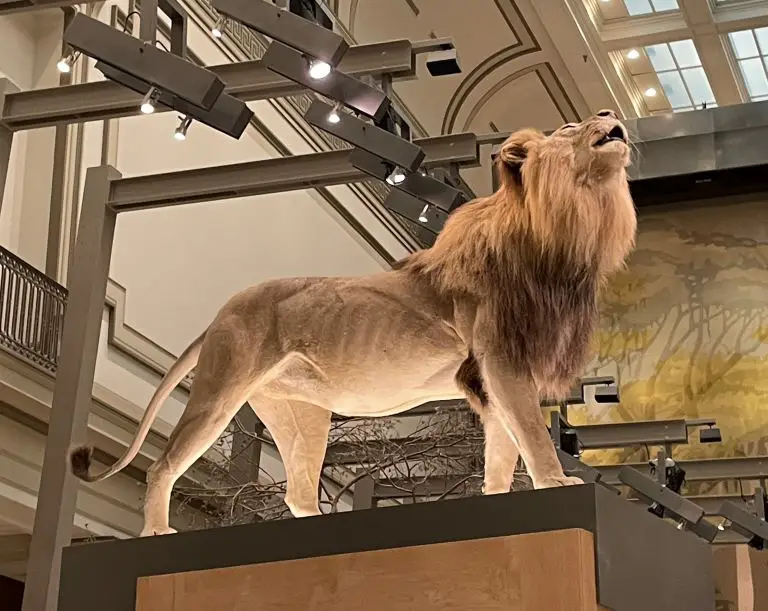
The Kenneth E. Behring Family Hall of Mammals is full of lifelike taxidermy and bronze animals posed in dramatic mid-action scenes. Some are extinct, while other species lucky enough not to encounter a poacher still exist. Kids love spotting the lions, the bears, and the towering giraffe, so don’t miss the giraffe.
Location: First floor.
4. Don’t Miss the Hall of Fossils
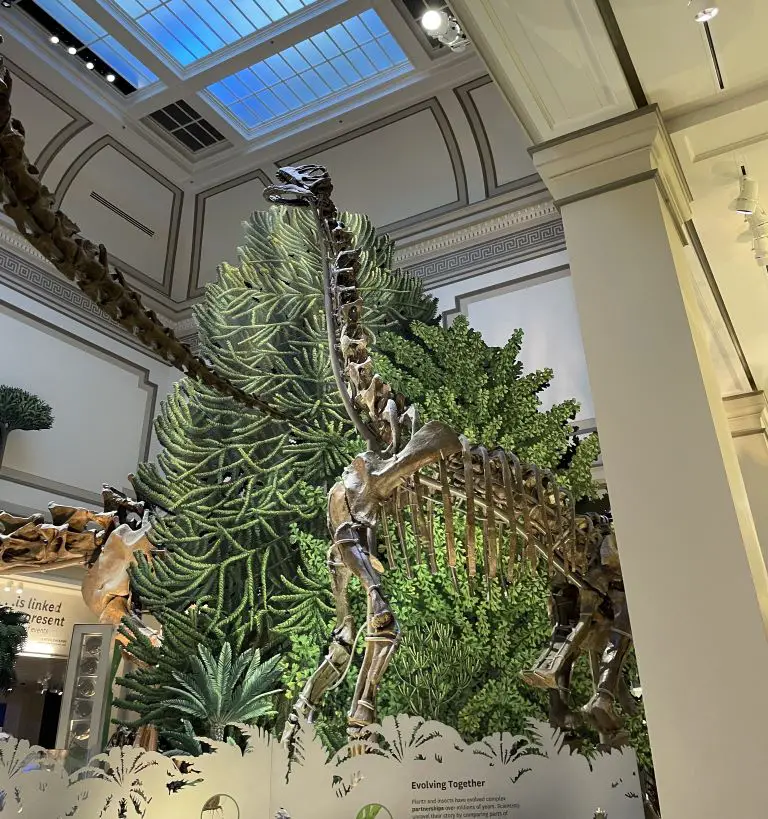
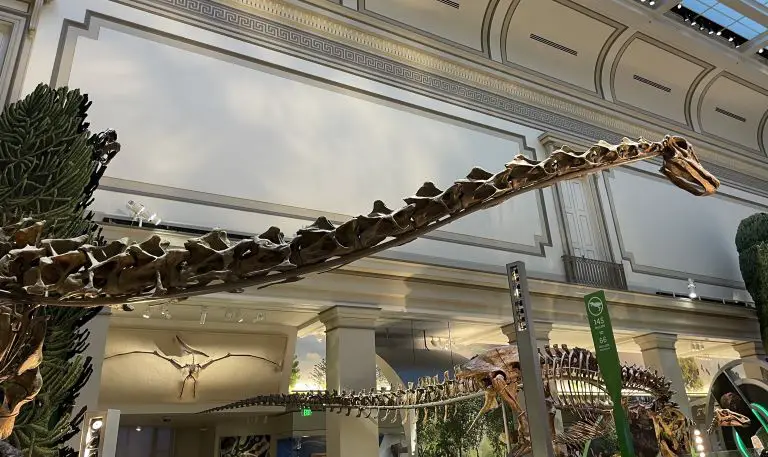
This is the headliner. Officially the David H. Koch Hall of Fossils—Deep Time, it’s a roughly 31,000-square-foot hall packed with dinosaur skeletons, including the real “Nation’s T. rex” posed mid-meal over a Triceratops, plus a saber-toothed cat and hundreds of other specimens spanning billions of years of life on Earth. If your kid is going to lose their mind anywhere in this building, it’s here.
Location: First floor.
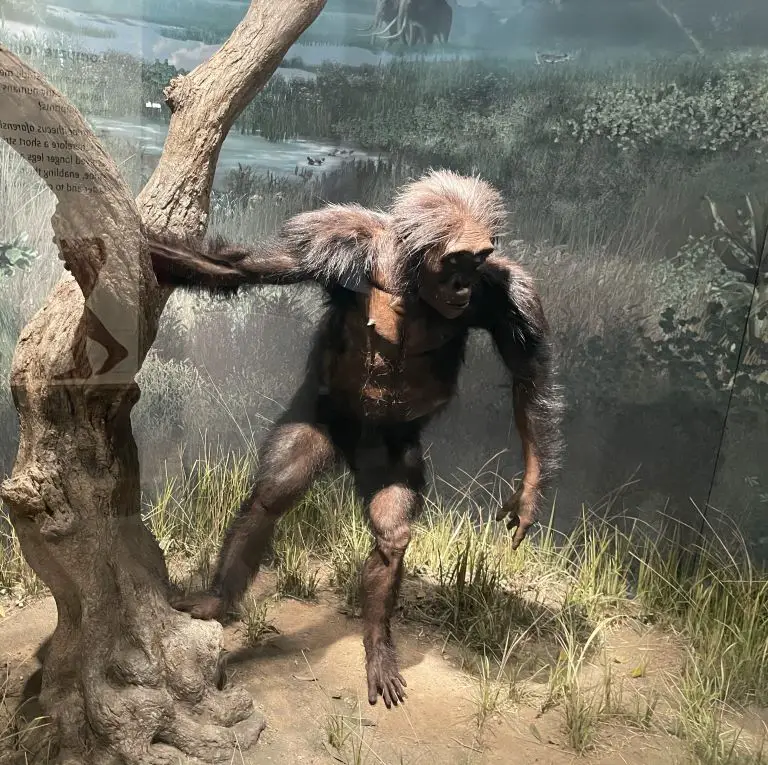
5. Get a Little Creeped Out in the Hall of Human Origins
The David H. Koch Hall of Human Origins teaches us about evolution. There are some reconstructed early-human heads that you would not want to encounter alone in the dark and a steadily climbing world population counter that’s a little depressing if you stop and stare at it.
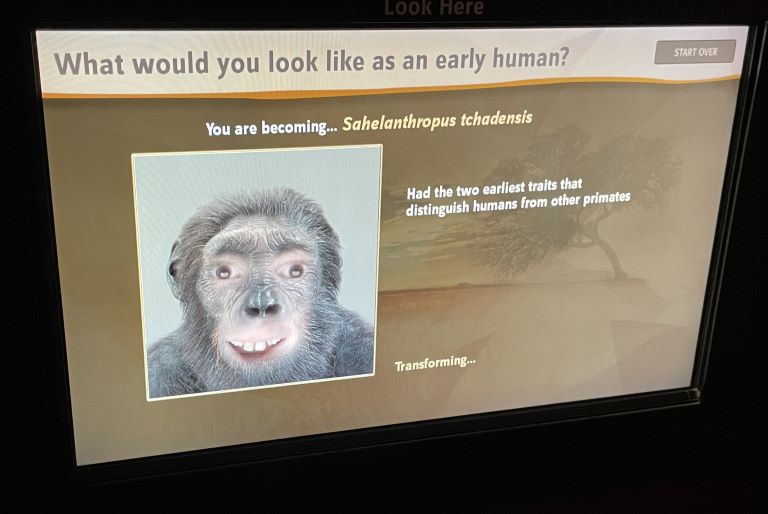
The highlight of this section is the morphing station. There, a machine takes your picture and shows you what you would have looked like as an early human. Spoiler alert: It’s not pretty. My kids demanded multiple turns; I demanded we never speak of mine again.
Location: First floor.
6. See the Mummies (with Caution)
The Eternal Life in Ancient Egypt section is genuinely interesting. It has mummies and tombs. It’s also dark, and death is the resounding theme. There is a step-by-step display on how ancient Egyptians removed a body’s organs during mummification, plus some rather disconcerting photos for young kids.
Decide whether your kid can handle, or cheerfully ignore, the things he or she may not love before you walk in. Some six-year-olds think mummies are the coolest thing they’ve ever seen. Others ask very loud questions about organs in a very quiet room.
Location: Second floor.

7. Take the Tweens to the Cell Phone Exhibit
“Cellphone: Unseen Connections” digs into how phones are made and how they’ve rewired our lives, with a multi-wall comic strip and screens to play with. Any kid permanently fused to their device will feel right at home. One important heads-up: this is a temporary exhibit set to leave at the end of 2026, so if it’s on your must-see list, confirm it’s still on view before you build a day around it.
Location: Second floor.
8. Watch the Live Insects Crawl
The O. Orkin Insect Zoo has live bugs, including tarantulas. Yeah… When it’s open, staff sometimes run live tarantula feedings, which are equal parts educational and deeply unsettling. One catch: this hall periodically closes for maintenance, and I’ve seen conflicting reports on its current status, so check naturalhistory.si.edu before you promise the kids a spider show. (The old standalone Butterfly Pavilion, for what it’s worth, is now permanently closed, though there are still live butterflies and bees in the outdoor Pollinator Garden in season.)
Location: Second floor.
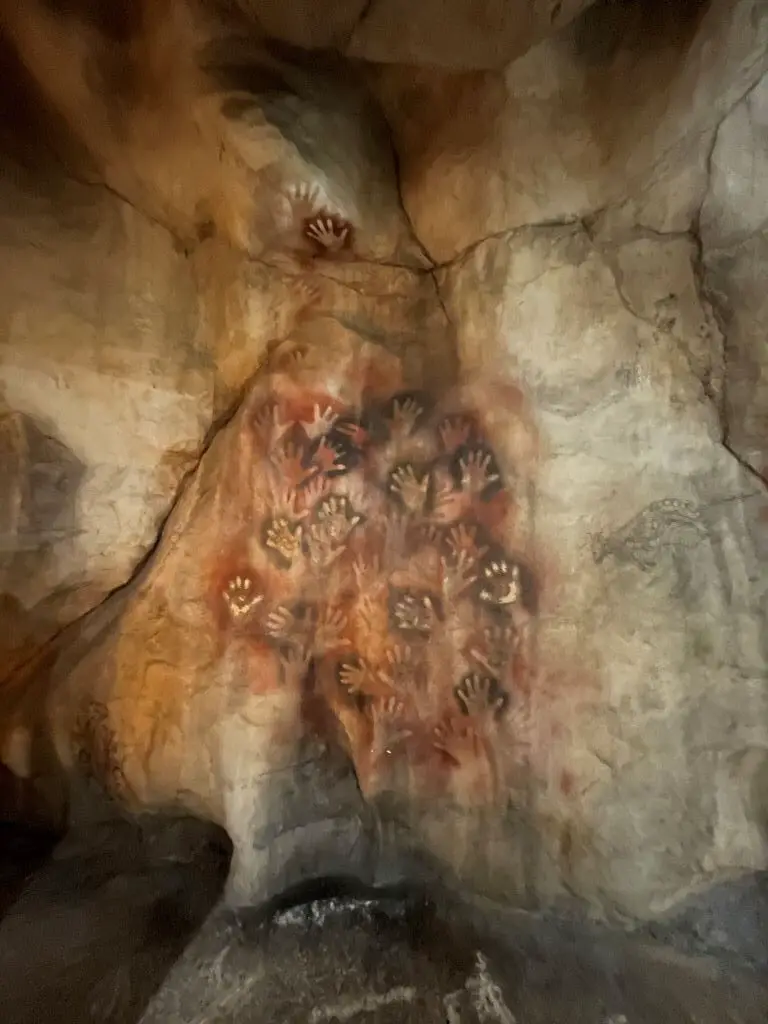
9. Explore Ocean Hall
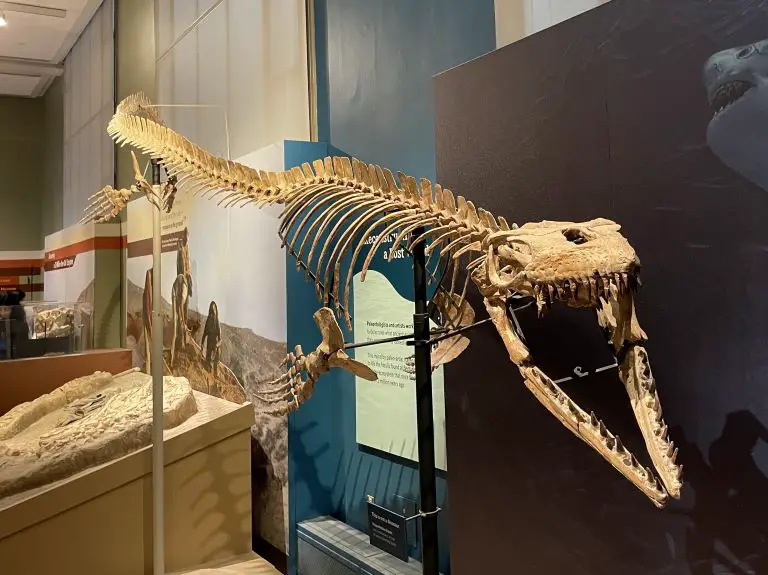
The Sant Ocean Hall has life-sized models of whales, sharks, and many other sea creatures, plus a few whale skeletons. Don’t miss the fossil jaw of an extinct Megalodon that’s bigger than the average human adult, which is exactly the kind of thing that makes an eight-year-old swear off the ocean forever. This is also the room where the overnight sleepover guests bunk down (more on that below).
Location: First floor.
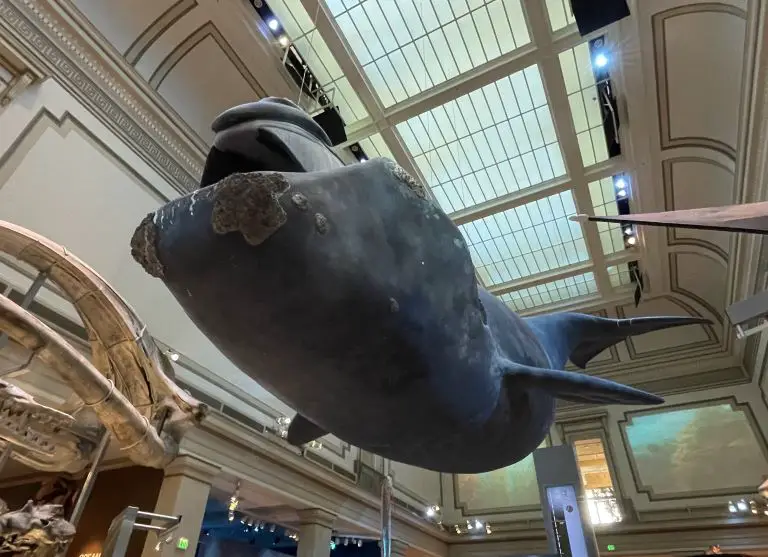
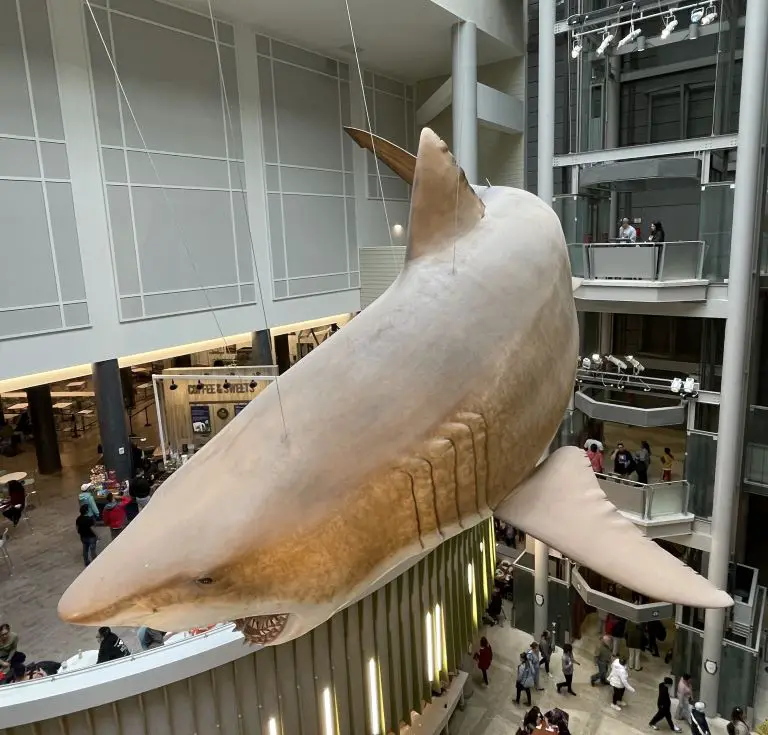
10. Look Up at the Giant Shark
Hanging from the ceiling is a 52-foot, roughly one-ton model shark with a mouth full of teeth. It’s an extinct species, so, fortunately, it’s just a model and not something that’s going to drop on the toddlers. Point it out, let everyone gawk, and move on before someone asks if it’s real.
Location: First floor.
11. Play in the Q?rius jr. Area
Q?rius jr. is a hands-on play space with puzzles, microscopes, activities, crafts, and interactive screens aimed at elementary-aged kids. It’s a great spot to let the little ones blow off steam after marching past a thousand “do not touch” signs.
Older kids can head to the regular Q?rius space (not jr.), which offers activities and puzzles pitched at tweens and teens.
Note: Q?rius jr. has been temporarily closed in the past with no firm reopening date, and its status can change, so check the official site before you build it into your plan.
12. See Dum Dum From the Night at the Museum
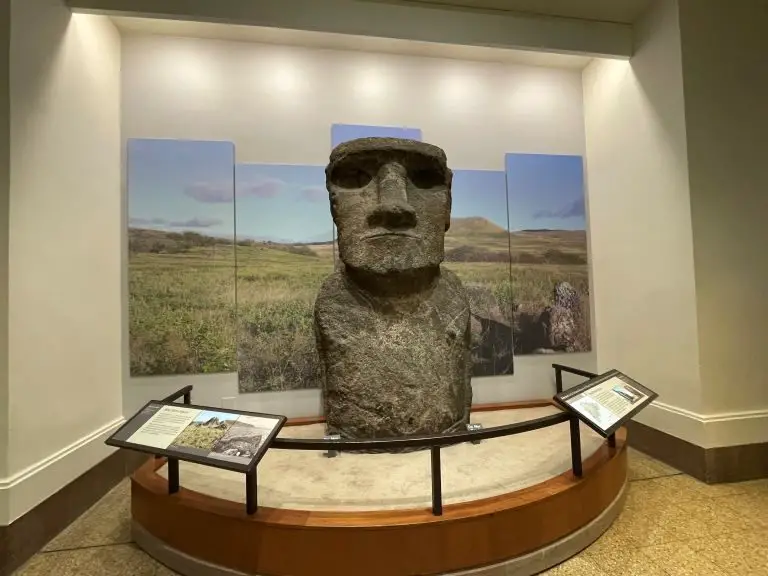
There’s an Easter Island moai that looks a whole lot like Dum Dum, the statue who constantly demands “gum gum” in the Night at the Museum movies. If your kids have seen the films, swing by and let them yell “you give me gum gum!” at a priceless artifact. The security guards have heard it before.
Location: First floor.
13. Walk the National Mall
This is a bit of a cheat because it’s not technically in the museum. The building sits right on the National Mall, though, so you can walk straight out the door to a giant grassy stretch where kids can finally run, with the Washington Monument, the Capitol, and a row of other Smithsonian museums all within a short stroll. It’s also worth knowing that some of the best free attractions in the country are clustered within walking distance, and there are plenty of dining options nearby for when everyone melts down. Plan to spend some time out here with young kids after the museum. If you’re building a longer trip, my Washington DC packing list covers what to bring so you’re not buying $9 ponchos on the Mall.

14. Spend the Night
The museum hosts overnight Smithsonian Sleepovers for kids ages eight to 14, who must be accompanied by an adult. You essentially get the museum to yourselves after hours, with organized games, crafts, an evening snack, and breakfast, and everyone sleeps in a sleeping bag in the Sant Ocean Hall under the whales. As of 2026 it runs about $150 per person for general admission (less for Smithsonian Associates members and groups), on a handful of summer dates, with advance registration required and no walk-ups. Unfortunately, adults have to stay too, so manage your back’s expectations. It won’t be the best night of sleep of your life, but it will be an adventure.
How Long Should You Spend at the Natural History Museum with Kids?
Plan on two to three hours to hit the dinosaurs, the elephant, Ocean Hall, and the giant shark without anyone having a meltdown. If your kids are the type to read every placard, or you’ve got a budding paleontologist, you can easily fill four hours or a full day. Because it’s free, you can also just pop in for an hour, see the fossil hall, and leave, which is a luxury you do not get at a $40-a-head aquarium.
Frequently Asked Questions
How much does the DC Natural History Museum cost?
General admission is free, and you don’t need a ticket or a timed-entry pass to walk in. A few special programs, like the overnight sleepovers, cost extra, but the museum itself won’t cost you anything.
What are the museum’s hours?
It’s generally open 10 a.m. to 5:30 p.m. every day except December 25. Hours are sometimes extended in the spring and summer, but those extensions aren’t guaranteed and are announced close to the season, so check the official site before you plan around a late closing.
Is the Natural History Museum good for toddlers?
Mostly, yes. Toddlers love the big elephant, the dinosaurs, the whales, and the giant shark, all of which are visual and require zero reading. Skip or speed past the mummies and the creepier reconstructed human-origins heads if your little one is sensitive, and don’t count on the Insect Zoo or Q?rius jr. being open without checking first.
What’s the best time to visit to avoid crowds?
Arrive right when it opens at 10 a.m., ideally on a weekday and outside of spring break and peak summer. The fossil hall and Ocean Hall pack in by late morning, and a stroller does not move gracefully through a wall of school groups.
How does it compare to other natural history museums?
It holds its own against the big ones. If you’re comparing notes, see my takes on the Field Museum in Chicago and the San Diego Natural History Museum. The DC one’s biggest edge is the price: free beats a ticketed museum almost every time.
Final Thoughts – What is There to Do at the DC Natural History Museum with Kids?
What is there to do at the DC Natural History Museum with kids? A lot, especially when you remember admission is free. Between the dinosaurs, the ocean creatures, the giant shark, and the hands-on play areas, there’s enough to fill a morning or a whole day, and you’re not out a single dollar at the door. Arrive as early as possible to beat the crowds, flag the darker exhibits ahead of time if you’ve got sensitive little ones, and you’ll have a great visit.
It’s worth a visit. Go see Washington DC with kids. You will not regret it.